


World Tuberculosis Day
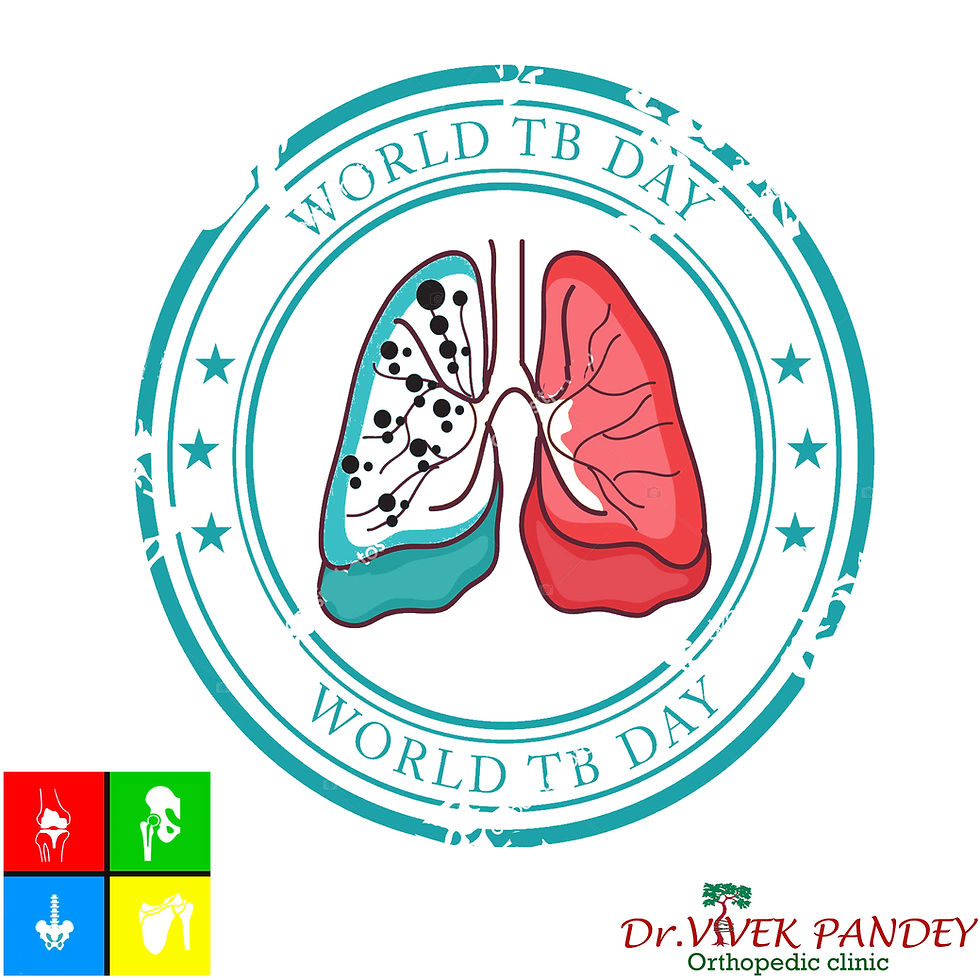
Each year we commemorate World TB Day on March 24 to raise public awareness about the devastating health, social and economic consequences of tuberculosis (TB) and to step up efforts to end the global TB epidemic.
The date marks the day in 1882 when Dr. Robert Koch announced that he had discovered the bacterium that causes TB, which opened the way towards diagnosing and curing this disease.

Despite significant progress over the last decades, TB continues to be the top infectious killer worldwide, claiming over 4 500 lives a day.
The emergence of multidrug-resistant TB (MDR-TB) poses a major health security threat and could risk gains made in the fight against TB.
The World TB Day 2019 theme is: It’s Time...
This versatile theme has a very strong meaning, it is simple to translate into any language and it can easily be adapted to cover any aspect of the TB work that one would like to promote.

Here are some examples:
It’s Time...
...to keep the promises made at the UN High-Level Meeting on TB
...for a world without TB
...to treat 40 million people affected by TB by 2022
...to know your TB status
...and many more!
World TB Day provides the opportunity to shine the spotlight on the disease and mobilize political and social commitment for accelerate progress to end TB.
Background
Last year, WHO reported that 10.4 million people fell ill with TB and there were 1.8 million TB deaths in 2016, making it the top infectious killer worldwide. This disease is deeply rooted in populations where human rights and dignity are limited.
While anyone can contract TB, the disease thrives among people living in poverty, communities and groups that are marginalized, and other vulnerable populations.
These include: migrants, refugees, ethnic minorities, miners and others working and living in risk-prone settings, the elderly, marginalized women and children in many settings etc.
Factors such as malnutrition, poor housing and sanitation, compounded by other risk factors such as tobacco and alcohol use and diabetes, affect vulnerability to TB and access to care.
Furthermore, this access is often hindered by catastrophic costs associated with illness, seeking and staying in care, and lack of social protection, resulting in a vicious cycle of poverty and ill-health.
The transmission of multidrug-resistant TB (MDR-TB) adds great urgency to these concerns.
Source
Comments